Wages, salaire & Marx
The four screenshots below are from a documentary on the recently passed sociolinguist Jan Blommaert. The quotes read:
"But just out of intellectual integrity, I think someone who is unfamiliar with Marx has an enormous gap in their education. So, that person will not see many connections that they should see":

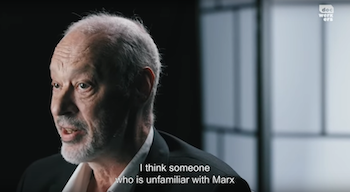


The quotes are in relation to the inadequate infrastructure facilities for children learning at home during the (ongoing) COVID19 crisis.
This reminded me of my own enormous educational gap in Marx. When I started teaching French (adult) students, they would not infrequently ask me what the noun "wages" meant. Although French does have a number of ways to talk about paid remuneration the most common word my students were familiar with was "salaire" which clashes with the English distinction of wages and salary. I would go on to try to explain the difference between wage and salary, along the lines of wages being used more for hourly paid work and salary for yearly paid work and the implications of social status attached to their respective uses.
I never thought to look at what unites the different ways to talk about getting paid for work. Namely the producer of surplus value selling their labour power to buyers of labour power in order to eat. In other words highlighting the common ground that in our capitalistic society people have been dispossesed (often violently) and separated from the means of subsistence and so now to survive we receive a wage in exchange for our labour potential.
The TEFL Workers Union based in the UK are developing a "Labour English" page of lessons because as they write:
"Too many ELT materials uncritically teach about life and work and the economy from the perspective of our bosses."
Hopefully this post, in lieu of an actual lesson on "Labour English", can be a reminder to language teachers that a critical approach can be had from apparently simple questions students may ask you.